Yellow Voices
An online gallery that gives space to Asian-Brazilian women artists who find no place in traditional institutions. The result of four years of research, listening and collective building, it began as my Graphic Design thesis.
- Thesis project, UTFPR
- Four years
- Design, research, UX and UI
- Claudia Bordin Rodrigues da Silva
The platform in motion
A short film through the pages of the site, from the gallery to the contact form, on desktop and mobile.
Six pages, six colors
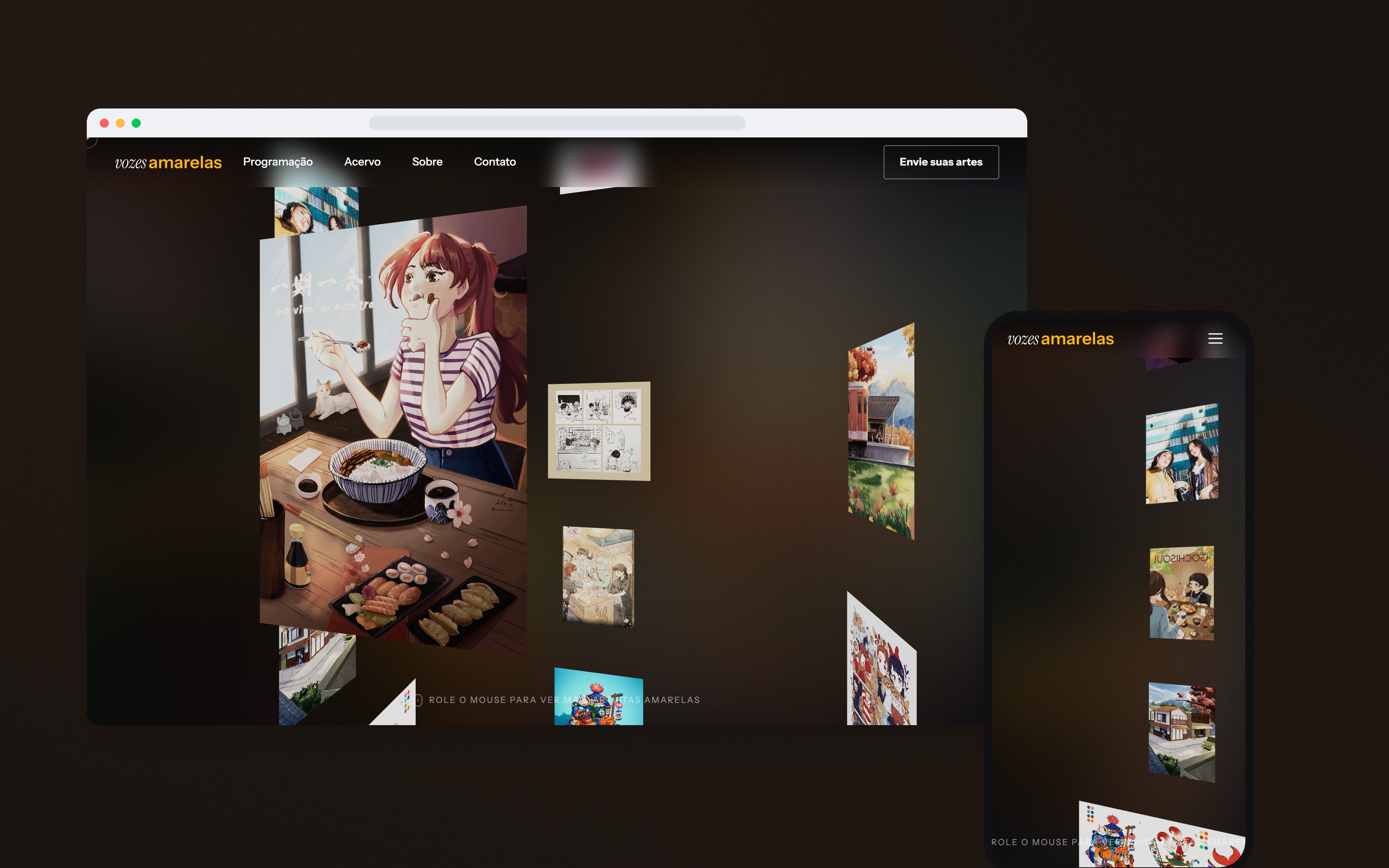
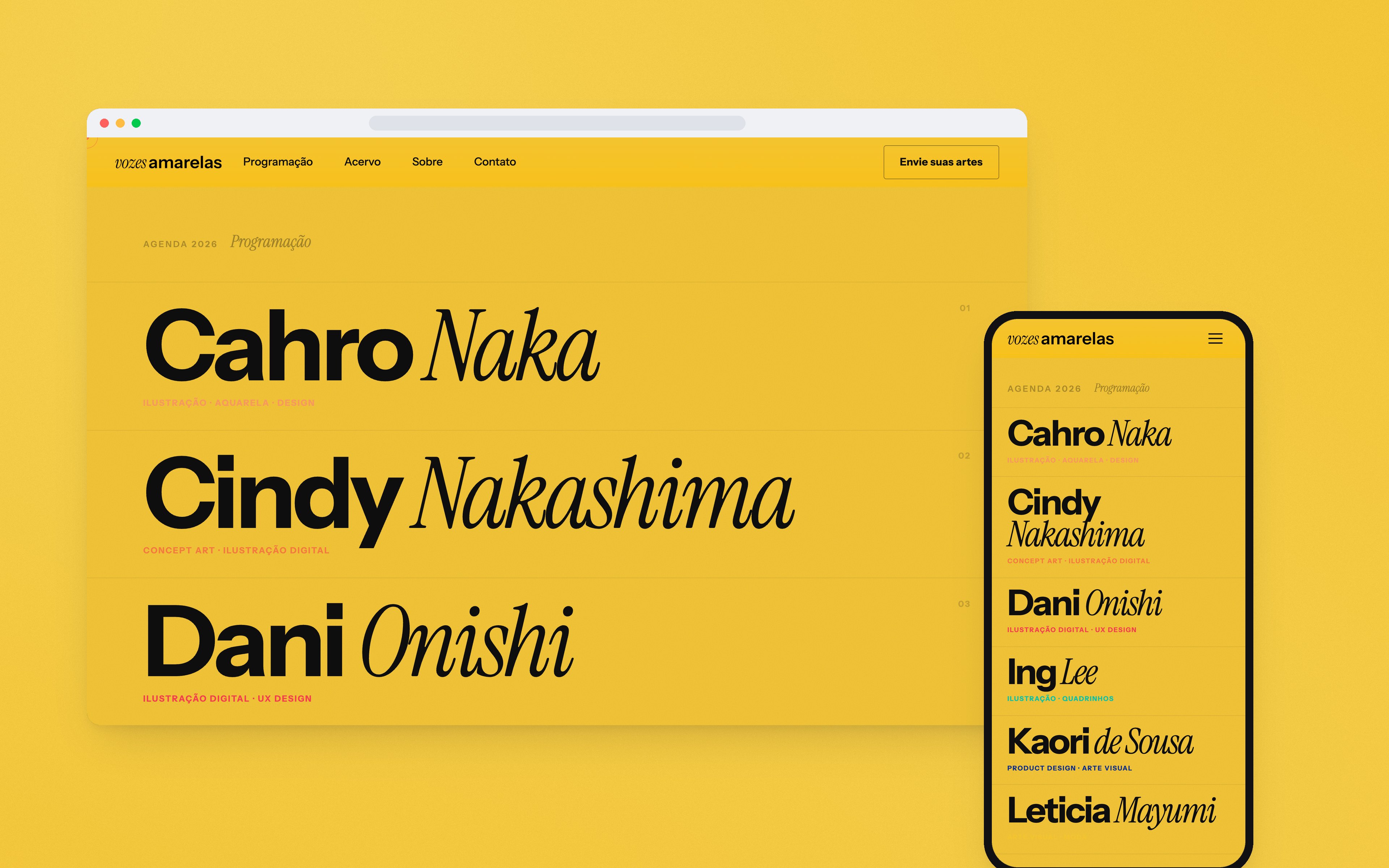
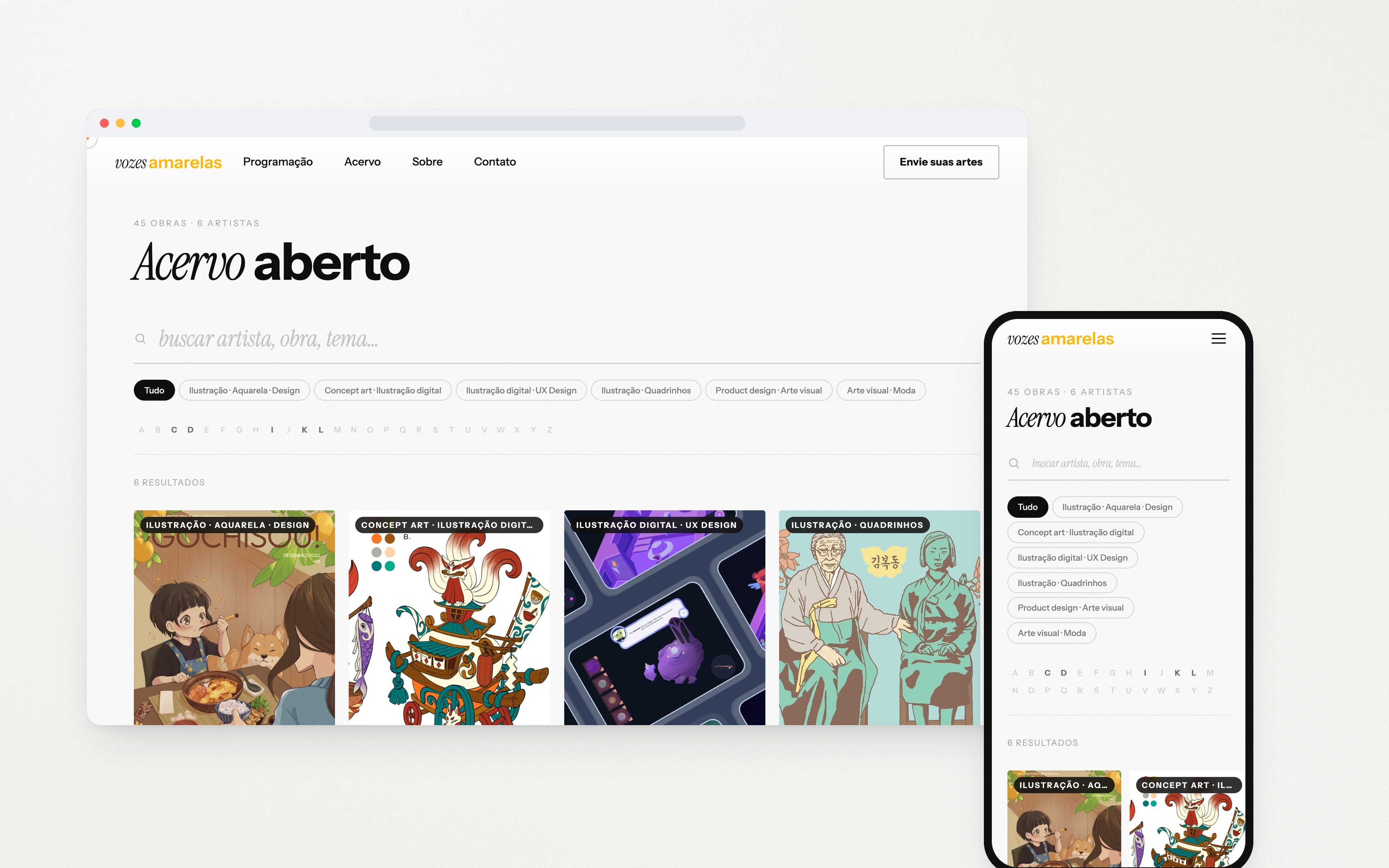
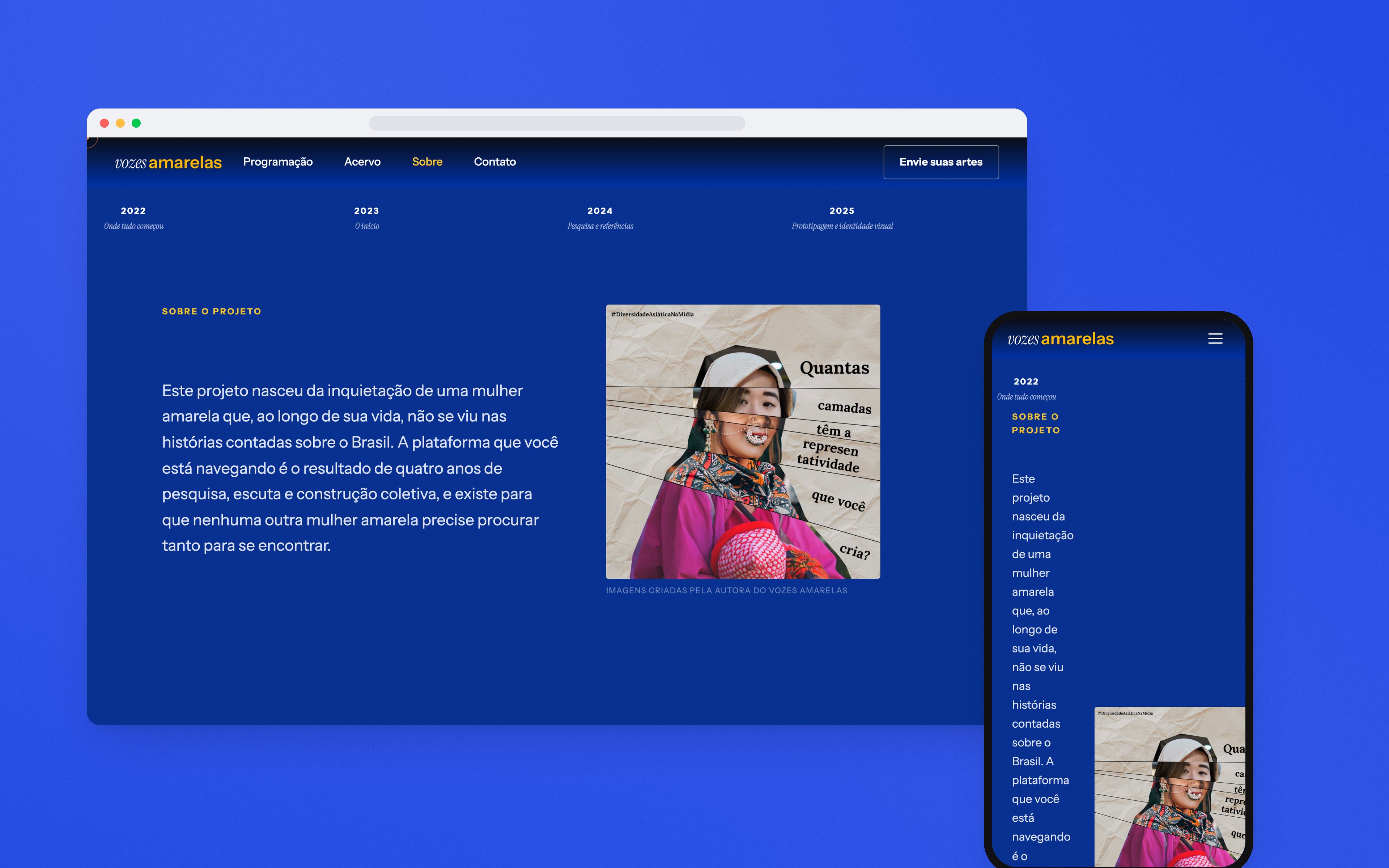
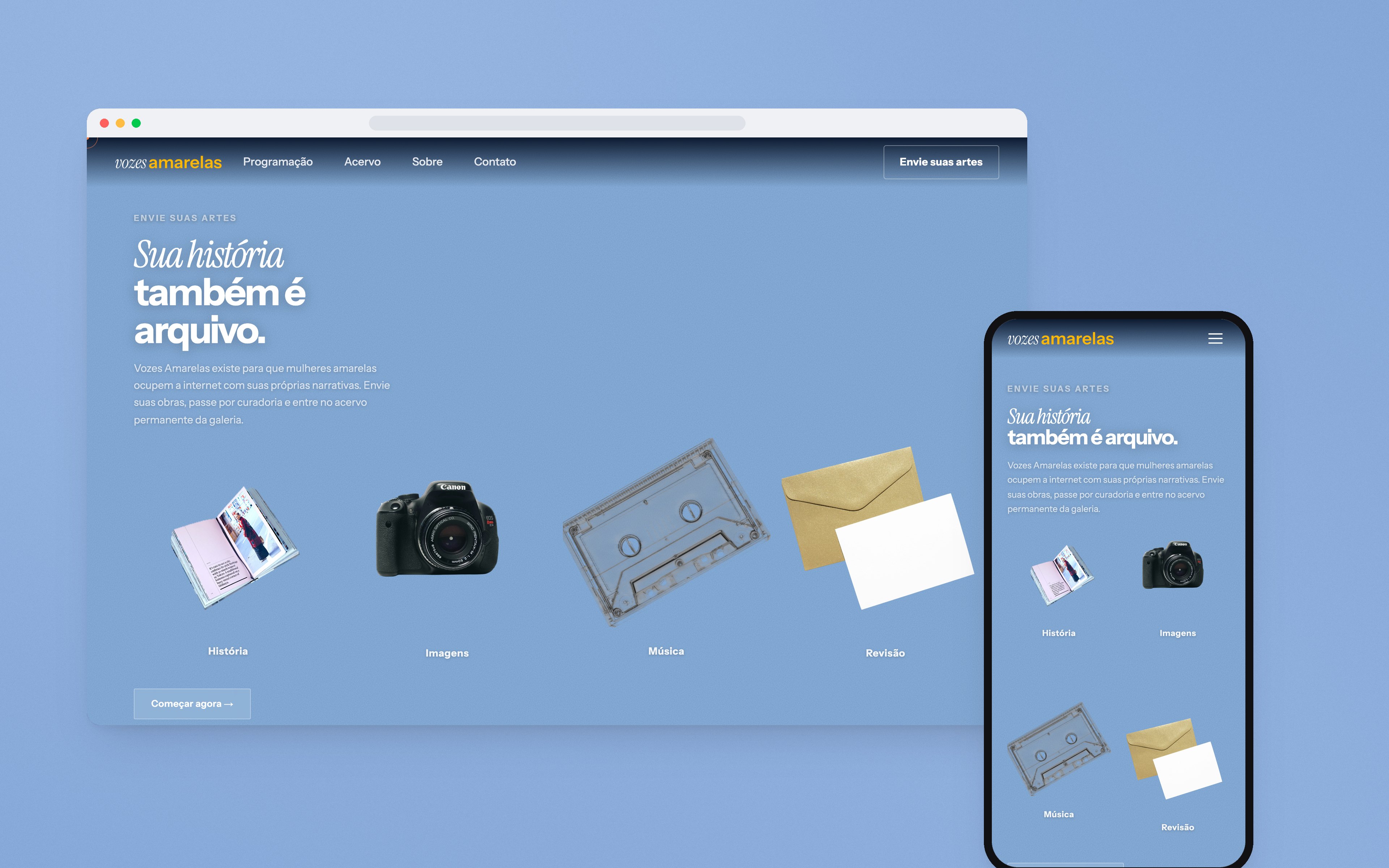
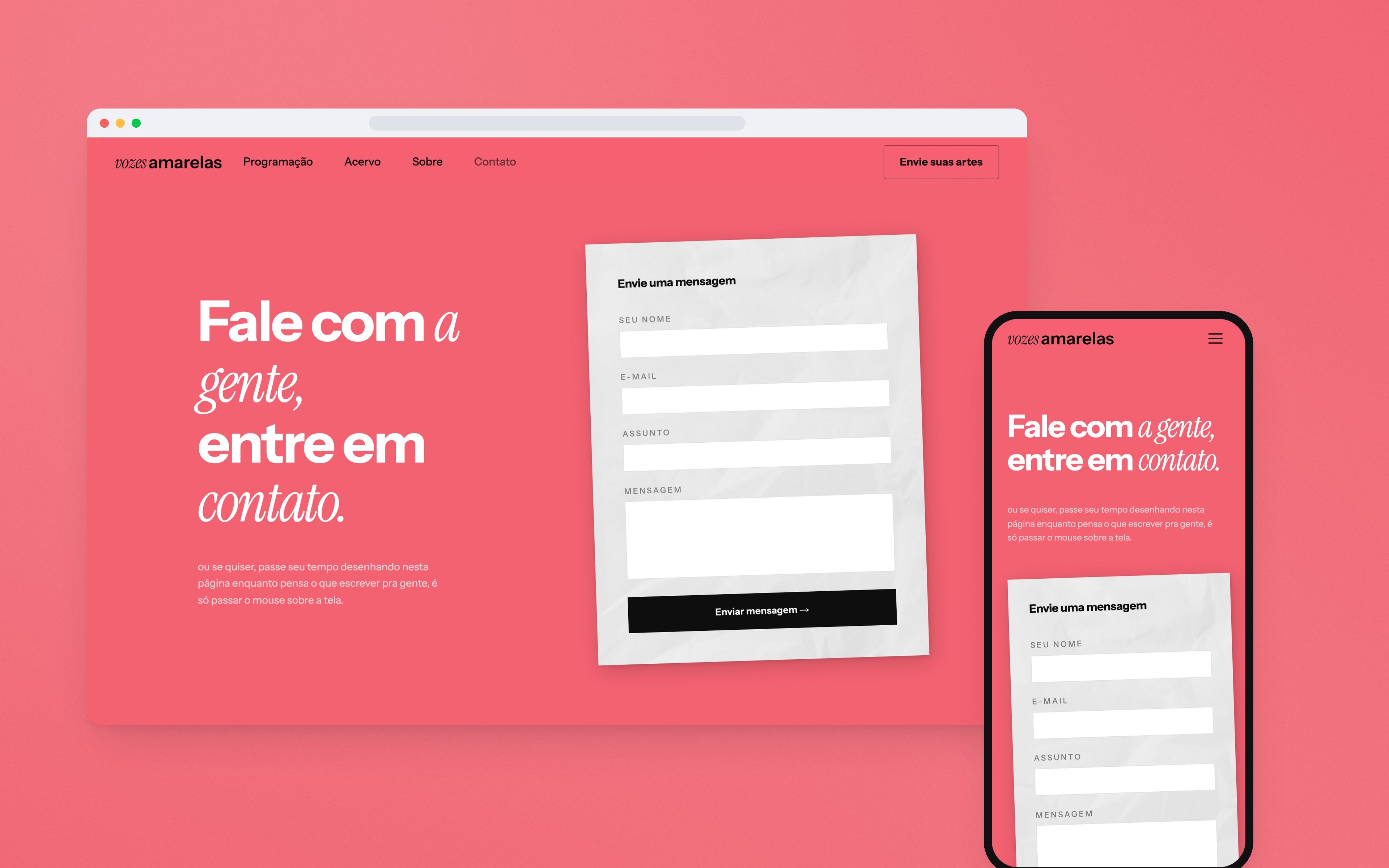
Each page has its own color: dark for the gallery, yellow for the program, white for the collection, blue for the project, light blue for submissions and coral for contact. The same site works on desktop and on the phone.
Four years, step by step
2022
Where it all began
The first seed of the platform was planted in 2022, in the first qualitative interviews with Asian-Brazilian women from São Paulo and Curitiba, who belonged to collectives and art movements and produced knowledge about yellow feminism in Brazil. “There is no use talking only to our neighbors, we have to talk to everyone, reach a place where someone in Tocantins will have access, because there is Asian representation all over Brazil.” Juily Manghirmalani
2023
The beginning
In 2023, still a Graphic Design student at UTFPR, I started developing the project as my thesis. Yellow Voices (“Vozes Amarelas” in Portuguese) was the name chosen, and the motivation was to create a space where women like us could recognize themselves, tell their stories and occupy the internet with their own narratives.
2024
Research and references
The year was devoted to visual research and methodological depth. I analyzed fifteen digital museums from around the world, studied Western and Japanese web design patterns and built a foundation on how to present cultural production in an accessible, sensitive and politically coherent way.
2025
Prototyping and visual identity
In 2025 the project took shape. The visual identity came from moodboards co-created with seven Japanese-Brazilian women: Kaori, Mayumi, Naomi, Dani, Laura, Cássia and Viviane. Colors, typefaces, logos and graphic elements were built from their personalities, memories and preferences.
2026
Launch
After usability tests with eight participants and final adjustments based on their feedback, the platform was finished and made public. What began as an academic project became a living space where yellow women record their stories, show their work and find others like them.
Tested with eight people
The usability tests ran on Maze, with participants aged 18 to 50. Everyone described the interface as intuitive, modern and fun to explore, and the animated gallery on the home page was the most praised element.
- 4.5/5
- average navigation score
- 7/8
- understood the purpose without being told
- 5/8
- found no difficulty in the submission flow
“A project that lives inside a museum, meant to give visibility to artists who aren't always recognized as they should be.”
- Clearer submission steps
- The first screen of the submission flow now shows it is the start of a sequence, and that the music step is optional.
- A freer story editor
- Typing no longer requires picking a formatting option first.
- Fixes and legibility
- Buttons with technical issues were fixed, the music player was reactivated, and the type hierarchy was revisited.
- 5
- qualitative interviews with yellow and brown Brazilian women
- 7
- women who co-created the visual identity
- 15
- digital museum websites analyzed
- 4
- years of research and building